Return to Origin is the silent profit killer for eCommerce sellers operating in India. When a customer refuses delivery or the courier simply cannot find the address, the package is shipped all the way back to you. You lose the forward shipping fee, you pay the return shipping fee, and your valuable inventory is locked up in transit for weeks.
Meesho sellers face particularly high return rates because of the platform focus on tier 2, tier 3, and deep rural markets, combined with a massive volume of Cash on Delivery orders. Managing this return rate is critical to your business survival. One of the most effective ways to combat this massive loss is by analyzing and filtering your daily dispatch based on destination.
Why certain cities and states have high RTO rates for Meesho sellers
Not all geographic regions perform the same when it comes to final delivery success. Certain areas consistently show high return rates for several very specific reasons.
First, incomplete and vague addresses are extremely common in rural areas. A customer might just write a generic village name and a phone number, making it nearly impossible for the delivery executive to find the exact house without multiple phone calls. Second, some remote regions have very poor courier infrastructure, leading to massively delayed deliveries. When a standard package takes 15 days to arrive, the customer often changes their mind and rejects it at the door.
Finally, fraudulent buyer behavior is sometimes heavily concentrated in specific pin codes. Experienced sellers often notice patterns where orders from a particular small town have an 80 percent return rate. Recognizing these specific problem areas is the very first step to fixing your net profitability.
How TheLabelCutter address filter tool works
Identifying bad addresses manually by reading every single printed label is impossible when you have hundreds of daily orders. TheLabelCutter offers a powerful address filtering tool designed specifically to help you manage this exact problem automatically.
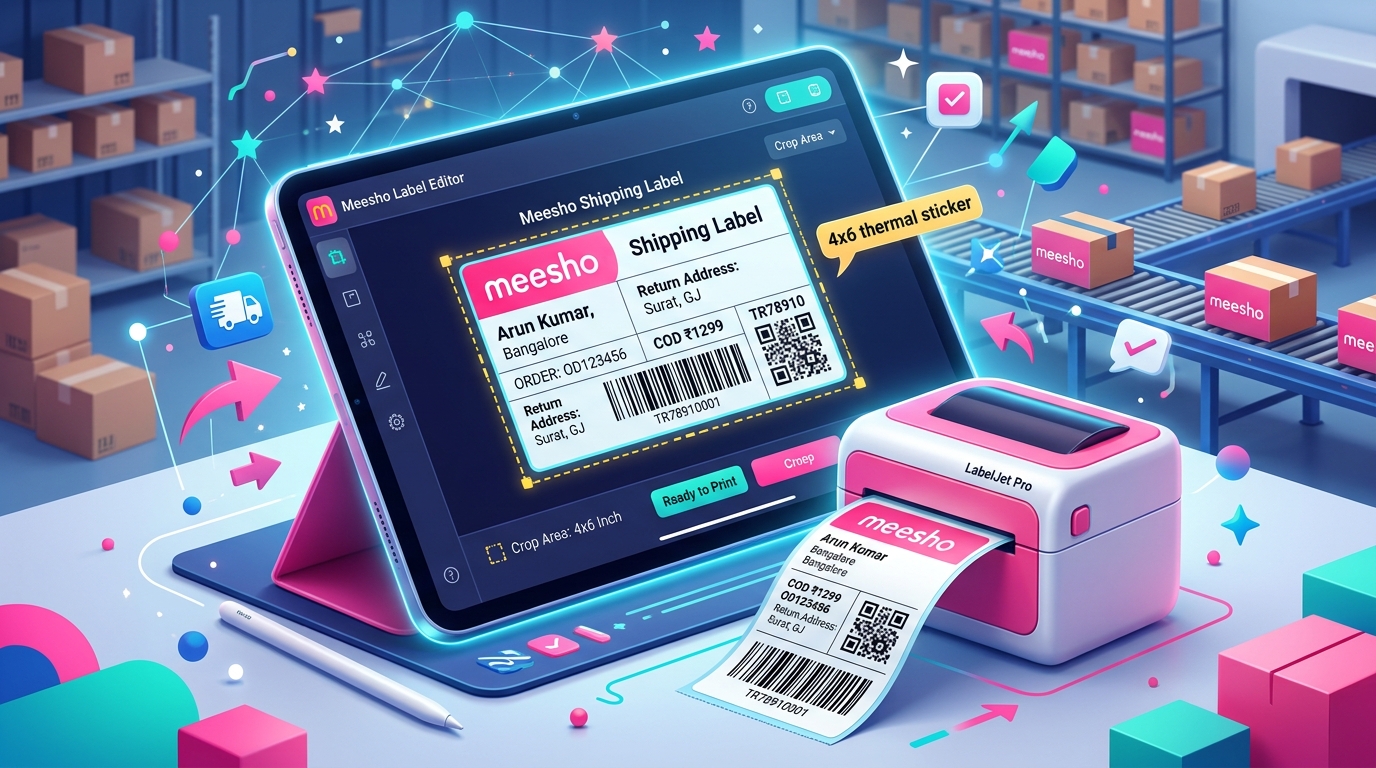
When you upload your raw Meesho PDF, the software instantly scans the destination address block on every single label. It extracts the state, city, and pin code data digitally. You can then use the clean filtering interface to search for specific locations you know are problematic for your business.
For example, if you know a certain remote district in Bihar has a massive return rate for your specific products, you can type that exact district name into the filter. The tool will instantly isolate all labels heading to that destination. You can then choose to separate these risky labels from your main safe print batch.
Common high-RTO pincode patterns in North India and Northeast
While every seller data is unique to their product category, there are broad patterns in the Indian eCommerce logistics network. Deliveries to the Northeast states often face extremely high transit times. Because surface transport takes a very long time, the risk of customer cancellation and subsequent return is much higher than standard local deliveries.
Similarly, certain remote districts in Uttar Pradesh, Bihar, and West Bengal frequently appear on high-return lists due to difficult physical terrain, incomplete address habits, and inconsistent final-mile courier service. Tracking your own historical platform data is the best way to build your personal list of blocked or high-risk pin codes.
COD vs Prepaid RTO rate difference
The customer payment method is the single biggest predictor of a return. Prepaid orders have a very low return rate, usually well under 5 percent. The customer has already paid real money, so they have a very strong incentive to accept the package.
Cash on Delivery orders are a completely different story. Return rates for these orders can range from 20 percent to over 40 percent depending on the product category. The customer has absolutely no financial commitment when placing the order on the app. If they are not home, or if they simply changed their mind, they reject the package without a second thought.
When you combine a known high-risk location with a Cash on Delivery payment method, the probability of a return skyrockets. Filtering allows you to identify these specific high-risk combinations before you dispatch the physical item.
How to use address data from the label tool to make dispatch decisions
Once you use TheLabelCutter to identify specific orders heading to high-risk areas, you have to decide how to handle them operationally. You have a few strategic options.
Option one: You can choose to delay the dispatch slightly to call the customer directly and verify the address and their actual intent to purchase. If the customer does not answer after three tries, you might decide the order is too risky and choose to not ship it, accepting a minor platform cancellation penalty instead of the heavy logistical loss.
Option two: You can dispatch these risky orders entirely separately and monitor them closely through the courier tracking portal. If you see the package is stuck at the destination hub for days, you can escalate the issue with Meesho seller support immediately to force a delivery attempt.
Practical RTO reduction strategies beyond address filtering
Filtering addresses is powerful, but you should combine it with other physical strategies. Always ensure your product packaging is excellent. A damaged or flimsy outer box often leads to instant customer rejection at the doorstep.
Ship your daily orders as fast as humanly possible. The quicker the customer receives the product, the less time they have to experience buyers remorse and cancel the order on the app. Use SKU batch picking and thermal printers to reduce your warehouse processing time to just a few hours.
Finally, track your return data continuously. An area that has high returns today might improve next month if a brand new courier hub opens nearby. Keep your block list updated based on recent performance data.
Frequently asked questions
Can the tool automatically block bad pin codes?
The tool extracts and allows you to filter the addresses dynamically. You define exactly which locations to isolate based on your own business data and operational experience.
Will Meesho penalize me if I cancel an order to a bad address?
Yes, Meesho imposes strict penalties for seller cancellations. You must carefully weigh the cost of the cancellation penalty against the total logistics loss of a return to decide which is the better financial choice.
Does filtering addresses slow down the PDF processing?
No, the text extraction and filtering happen in milliseconds, even for massive files with hundreds of pages.
Can I export the address data to Excel?
The primary function of the tool is to sort and format the PDF for physical printing. For deep data analysis, you should download your raw order reports directly from the Meesho seller panel in standard CSV format.
How accurate is the address extraction?
The data extraction is highly accurate as it reads the pure digital text embedded in the original PDF generated by the eCommerce platform.