One of the most confusing operational aspects of starting an eCommerce business in India is understanding the required paperwork. When you download orders from the Meesho panel, you get a default PDF that contains both a shipping label and a detailed tax invoice. This double format takes up a full A4 sheet of paper.
Many new sellers wonder if they are legally required to print and physically attach the tax invoice to every single package, or if the shipping label alone is enough for dispatch. Wasting paper on unnecessary invoices eats directly into your profit margins and slows down your packing speed. This guide clarifies the GST rules, explains the distinct difference between the two documents, and shows you how to handle them efficiently.
GST compliance requirements for Meesho sellers: what GSTIN rules say
Under the Indian Goods and Services Tax regime, any registered business selling taxable goods must issue a valid tax invoice for the transaction. This formal invoice must contain specific details, including the seller GSTIN, the buyer details, the HSN code of the product, the exact tax rate applied, and the total value.
When you sell on Meesho, the platform system automatically generates this required tax invoice on your behalf for every single order. The legal requirement is that the invoice must be issued and made available to the buyer. However, the law does not strictly mandate that a physical paper copy must be inside the box for standard retail consumer shipments, provided an electronic invoice is accessible to the buyer.
What is a tax invoice vs shipping label on Meesho PDFs
It is important to understand the very distinct purpose of each document located on that standard Meesho PDF page.
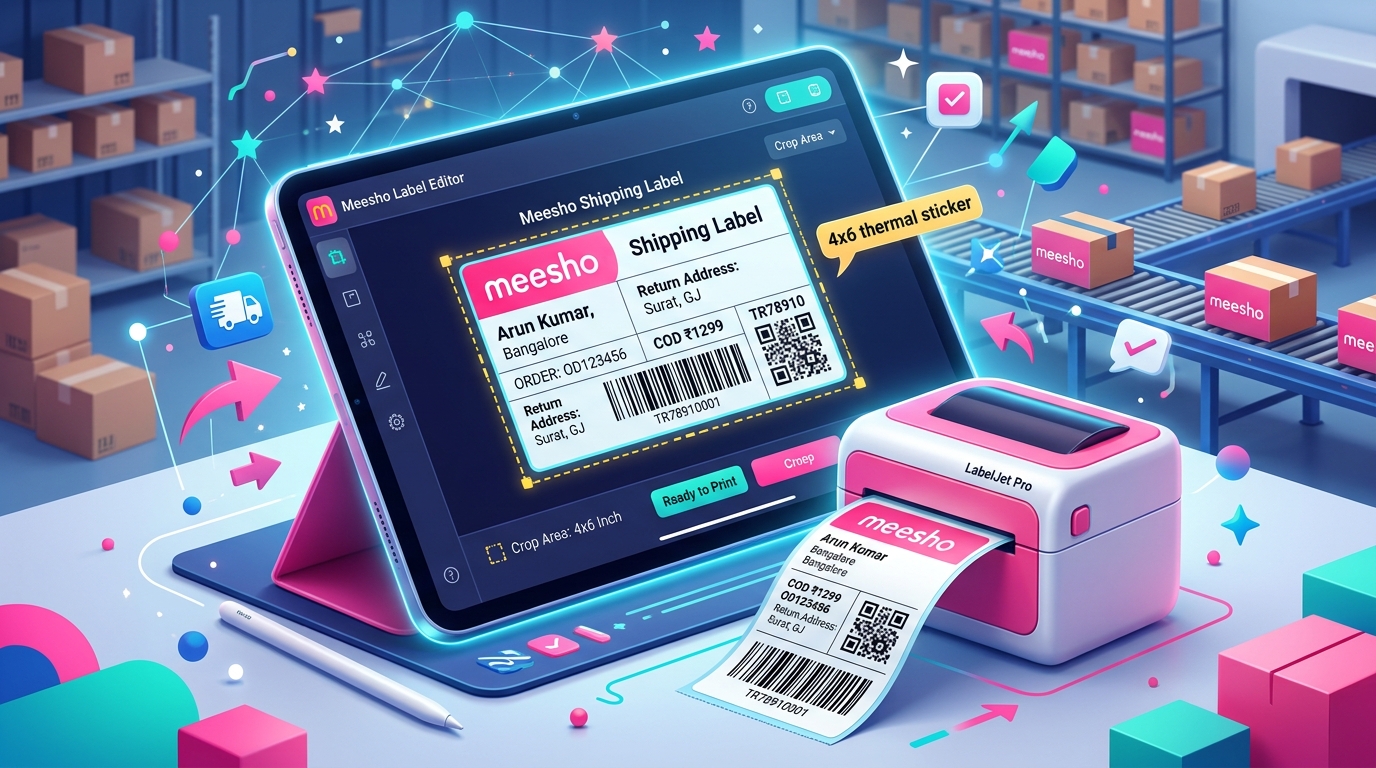
The shipping label is primarily for the logistics company. It contains the buyer name, shipping address, contact number, and the critical tracking barcode. The courier strictly uses this to route the package from your warehouse to the customer doorstep. Without a highly scannable shipping label, the package simply cannot travel.
The tax invoice is a financial and legal compliance document. It breaks down the exact cost of the product, the shipping charges, and the precise CGST, SGST, or IGST amounts collected. The courier executive does not need this document to deliver the package. It is purely for the buyer personal records and tax compliance.
When you need to print the tax invoice
There are specific business scenarios where printing and sending the physical paper tax invoice is necessary.
First, if you are fulfilling a Business to Business order where the buyer has provided their own GSTIN to claim input tax credit, a physical invoice must accompany the goods. The logistics provider may need to show this document at state borders during transit.
Second, for high-value shipments, strict e-way bill rules apply, and carrying a physical invoice becomes critical for legal transit compliance. However, since the average order value on Meesho is relatively low, standard sellers rarely hit this high threshold for individual standard retail orders.
When you can skip the tax invoice
For standard retail orders on Meesho, which make up the vast majority of daily sales on the platform, you absolutely do not need to print the physical tax invoice.
The buyer can easily download a digital copy of the tax invoice directly from their Meesho app order history section. The electronic copy fully satisfies the legal requirement of providing an invoice to the consumer. Furthermore, the shipping label itself contains a brief summary of the order value and product description, which is completely sufficient for standard courier transit within the country.
Skipping the physical invoice saves you massive amounts of paper, expensive toner, and the physical time required to fold and insert the document into the shipping pouch.
How TheLabelCutter handles invoice removal with the "Without Invoice" checkbox
If you decide to stop printing invoices for your standard retail orders, you need a way to remove them from the Meesho PDF quickly. TheLabelCutter makes this digital removal effortless. When you upload your Meesho bulk order PDF, simply check the option that says remove invoice. The software will instantly process the file, delete the bottom half of every single page, and give you a clean PDF containing only the shipping labels.
You can then print these standalone labels directly onto 4x6 thermal stickers or arrange four of them efficiently onto a single A4 page. This feature alone halves your paper consumption and speeds up your packing line significantly.
Record keeping requirements under GST for eCommerce sellers
Even if you do not print the physical invoice for the customer package, you are still legally required to maintain records of all your sales invoices for GST filing and potential audits.
You do not need to keep physical printed copies stored in filing cabinets. Digital record keeping is fully compliant and much safer. Ensure you download and safely store the monthly sales reports and invoice archives provided by the Meesho seller panel. Back these digital files up securely on a reliable cloud drive. When it is time to file your monthly returns, your accountant will use these digital records exclusively.
Frequently asked questions
Will couriers accept a package without a physical tax invoice?
Yes, for standard low-value retail eCommerce shipments, couriers only require a valid shipping label with a scannable barcode and a basic product declaration.
Does removing the invoice violate Meesho policies?
No, Meesho automatically provides the digital invoice to the buyer in their app. Sellers are fully allowed to attach only the shipping label to the exterior of the package for dispatch.
What if a customer demands a physical invoice after delivery?
You can instruct the customer to download the soft copy directly from their Meesho app. If they insist, you can email them the PDF copy generated by the platform.
Do I need an e-way bill for regular Meesho orders?
E-way bills are generally required for goods valued over fifty thousand rupees. Most standard Meesho clothing and accessory orders fall well below this limit, so e-way bills are not required for transit.